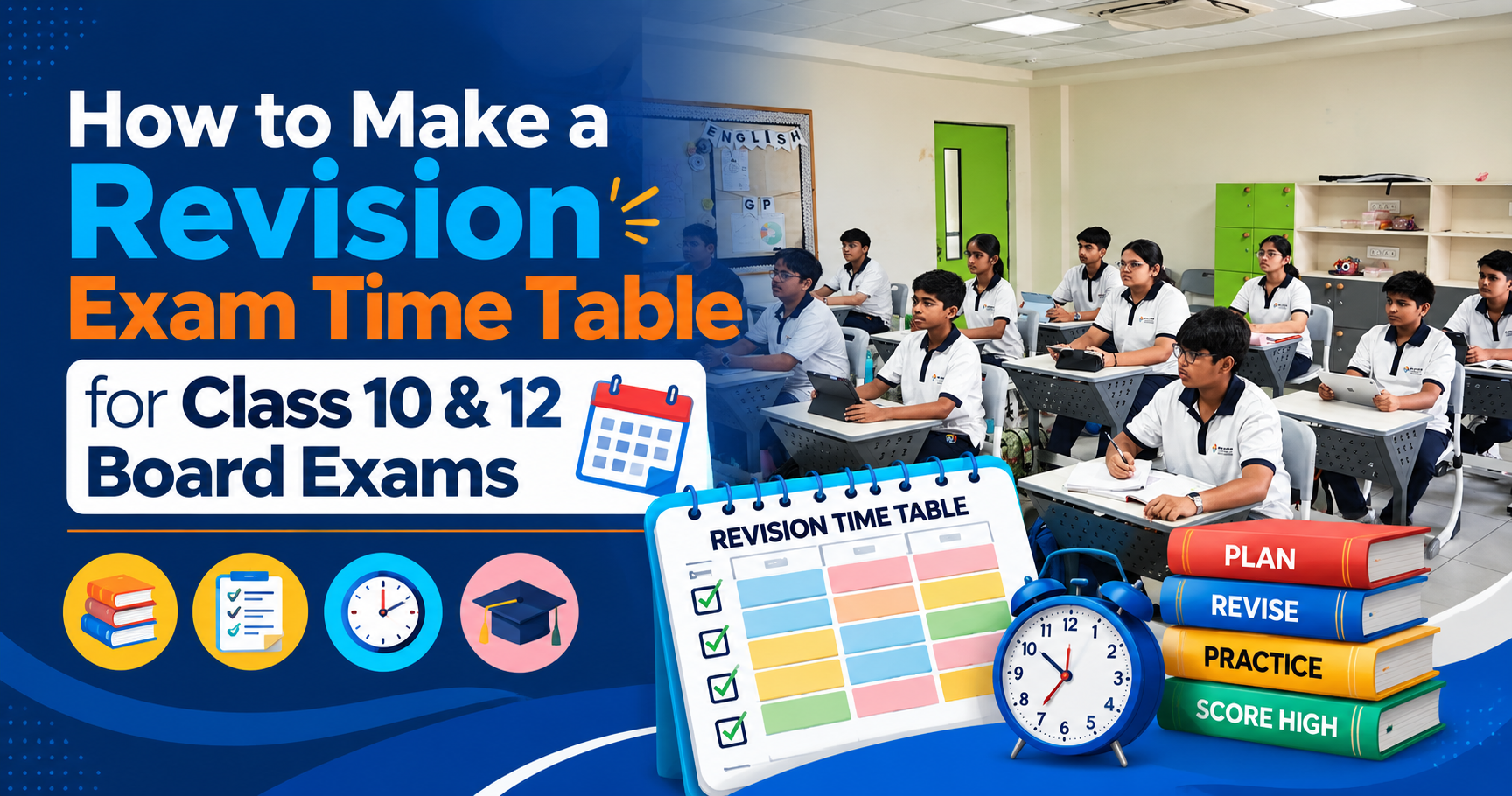
Most students do not fail because they did not study enough. They fail because they never had a clear plan for what to study, and when. Somewhere around February, with boards just weeks away, the syllabus suddenly feels three times bigger than it did in August, and every subject seems equally urgent.
A well built 12th revision exam time table, or one for Class 10, fixes exactly this problem. It does not add more hours to your day, it just makes sure the hours you already have are spent on the right things, in the right order.
Why a Revision Timetable Is Different From a Regular Study Plan
A regular study plan is built around learning new material. A revision timetable is built around consolidation, going back over what you have already studied, strengthening weak areas, and practicing under exam conditions. If you are wondering how to prepare for 10th board exams or how to prepare for 12th board exams in the final stretch, the answer usually comes down to this shift in focus.
The mistake most students make is treating revision like round two of first-time learning. That wastes time on chapters they already know well, while genuinely weak topics get the same shallow pass as everything else.
Step 1: Map Out What’s Actually Left
Before building any timetable, sit down with the full syllabus and mark three things honestly:
- Chapters you are fully confident about
- Chapters you understand but have not practised enough
- Chapters that still feel genuinely shaky
This single exercise changes everything about how the rest of your timetable gets built. Without it, you end up dividing time equally across subjects, which sounds fair but is actually inefficient. A subject you already know well needs far less revision time than one you are struggling with.
Building a Class 10 Revision Timetable
If you are figuring out how to study for 10th board exams, start by counting the number of days left and working backward from the exam date, not forward from today. This forces realistic planning instead of an optimistic one that quietly falls apart after the first week.
A workable structure for cbse class 10 board exam preparation usually looks like this:
- Give weak subjects two sessions a week instead of one
- Rotate subjects daily rather than spending an entire day on one, since this keeps concepts fresher across subjects
- Reserve the last two weeks almost entirely for practice papers and timed tests, not new content
- Build in one full off day every week, since burnout undoes more progress than a missed revision session ever does
This approach to 10th board exam preparation tips works because it respects how memory actually functions. Spaced, repeated exposure to a topic sticks far better than one long cramming session.
Building a Class 12 Revision Timetable
Class 12 comes with an added layer, most students are also managing competitive exam preparation alongside boards. A 12th revision exam time table needs to account for this overlap rather than ignore it.
Some practical 12th board exam preparation tips that make a real difference:
- Identify overlapping topics between board exams and competitive exams, and revise them together to save time
- Prioritise subjects with higher weightage or more scoring potential earlier in the timetable
- Use previous year board papers heavily in the final month, since CBSE question patterns tend to repeat in style even when exact questions change
- Keep at least one subject per day lighter, so the workload does not feel identical every single day
For cbse class 12 board exam preparation tips, one thing worth remembering is that consistency beats intensity. A student revising for four focused hours daily for six weeks will usually outperform one doing erratic twelve hour sessions that burn out after ten days.
A Sample Weekly Structure
Here is a simple structure many students find easy to actually stick to:
| Day | Focus |
| Monday to Friday | Two subjects per day, one revision, one practice |
| Saturday | Full length mock test for one subject |
| Sunday | Review mistakes from the week, light revision only |
This keeps the week varied enough to avoid boredom, while still building in the repetition that revision actually needs.
Keeping the Timetable Realistic
A timetable only works if it survives contact with real life. A few cbse 10th board exam preparation tips and general principles apply here regardless of class or subject:
- Build in buffer time for slower days, since some sessions will always take longer than planned
- Avoid scheduling more than 6 to 7 focused hours of revision per day, quality drops sharply beyond that
- Review the timetable every few days and adjust it honestly, rather than sticking to a plan that clearly is not working
- Keep sleep non-negotiable, since tired revision is barely better than no revision at all
Common Mistakes to Avoid
Even a well intentioned revision timetable can fall apart because of a few recurring habits:
- Starting with the easiest subject every day and leaving the hardest one for “later”
- Copying a friend’s timetable without adjusting it for your own weak areas
- Skipping practice papers until the very end instead of spreading them through the schedule
- Treating the timetable as fixed and rigid instead of a living plan that gets adjusted as you go
Fixing even two or three of these habits usually improves how effective a timetable actually is, more than adding extra hours ever would.
Final Thoughts
A good revision timetable is not about cramming more into your day, it is about spending the time you already have more intelligently. Whether you are building a timetable for Class 10 or a 12th revision exam time table for boards, the principles stay the same, know your weak areas, revise in a spaced, repeated way, and leave enough room for practice under real exam conditions.
FAQs
1. How many hours should I revise daily before board exams?
Most students do well with 5 to 7 focused hours a day in the final weeks, split across two or three subjects. More than that tends to reduce focus rather than improve it.
2. Should Class 10 and Class 12 students follow the same revision timetable structure?
The core principles are the same, spaced revision, weak area focus, and regular practice, but Class 12 timetables usually need extra room for competitive exam overlap and higher weightage subjects.
3. How far in advance should I start building my revision timetable?
Ideally 6 to 8 weeks before the exams begin, so there is enough time to revise every subject at least twice before the final week.
4. What if I fall behind on my revision timetable?
Do not try to catch up by cramming everything at once. Adjust the remaining schedule realistically, prioritise the weakest topics first, and let go of chapters that are already reasonably strong.
5. Are practice papers more useful than re-reading notes during revision?
Yes, especially in the final two to three weeks. Practice papers reveal actual gaps and build speed under exam conditions, which re-reading notes alone does not do.