Early Childhood Development
Early Childhood development is essential for a child’s future success, and there are several factors that can contribute to his or her growth and development. Preschool learning activities play a key role in this process. Here are five key elements that can help to boost early childhood development:
Nutrition
Providing essential fuel and vitamins for healthy brain and body growth.
Exercise
Building motor skills, agility, and a strong physical foundation from the start.
Stimulation
Sparking curiosity, cognitive pathways, and creative expression via active play.
Parental Involvement
Partnering together closely to ensure consistent guidance, love, and care.
Socialization
Learning collaboration, emotional sharing, and building interactive confidence.
Providing for these five key factors, parents can help foster their child growth and development and provide them with the resources and opportunities necessary for a successful future.
Cambridge Early Years Curriculum
Follows a holistic child development approach that focuses on the whole child through engaging preschool learning activities, and connects their development with the world and people around them. Is built around four key areas of early childhood development:
Physical Development
Strengthening fine and gross motor movements through creative and active play.
Language and Communication Development
Building rich vocabulary, reading familiarity, and self-expression skills.
Cognitive Development
Enabling structured thinking, observation, scientific inquiry, and logical reasoning.
Social and Emotional Development
Cultivating self-awareness, personal values, emotional control, and friendships.
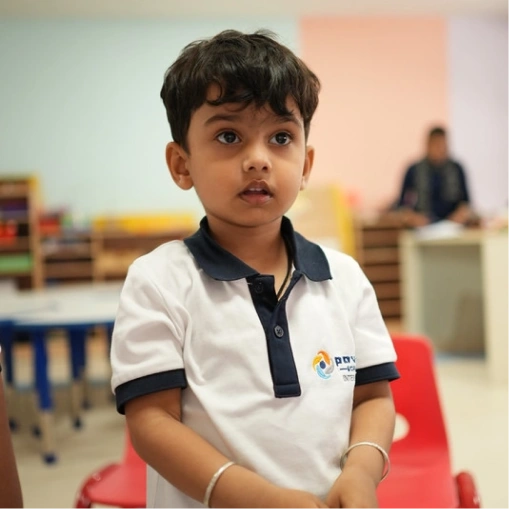
The Spiral Approach
Develops knowledge, understanding and skills through a spiral approach, by revisiting and engaging with topics and skills in more depth at each stage.
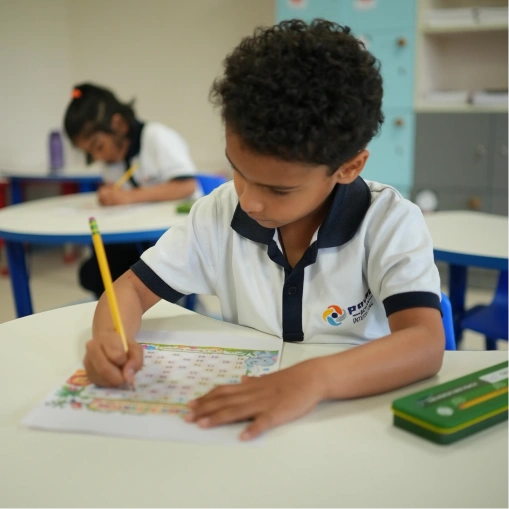
Development Milestones
Helps learners to meet internationally established milestones for early development.
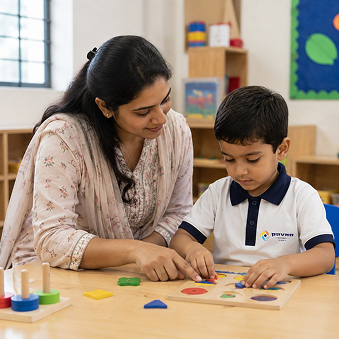
Individualized Monitoring
Although children develop at different rates, the curriculum provides a structure for teaching and learning that helps us for monitor and support each child's progress.
A Balanced Learning Experience
We ensure a balanced learning experience with six equally important and interconnected areas of development:
Communication, Language & Literacy
Your child will be encouraged to develop their speaking, listening, reading and writing skills.
Creative Expression
Your child will have the chance to express their ideas in a creative way.
Personal, Social & Emotional Development
Your child will develop social skills, and build self-esteem and confidence.
Social and Emotional Development
Cultivating self-awareness, personal values, emotional control, and friendships.
Physical Development
Your child will develop different types of movement skills and build the foundations for a healthy lifestyle, supporting strong physical Development For Children from an early age.
Understanding the World
Your child will learn to reflect, question, explore and interact with the world around them.
“Learning that stays with the student through school, university and beyond….”
Measuring Progress
Assessment is a crucial part of Early Childhood Education. It provides valuable insights into children’s progress, and helps teachers to plan and support the next stages of a child’s learning and development.
The Cambridge Early Years programme includes tools and resources that can help early years settings to assess and evaluate a child’s learning and development against the learning statements within the Cambridge Early Years curriculum framework.
The use of continuous formative assessment through observations and gathering evidence during learning is central to our approach.
It is on this basis that early years teachers are able to measure progress and provide reports to parents on a child’s level of attainment and achievement.
Cambridge Early Years is aligned with the National Education Policy (NEP) 2020, so when your child completes the programme they can also progress to local state or national curriculum in India.
Fully mapped milestones transitioning seamlessly to future academic levels.
How will my child benefit from the programme?
The Cambridge Early Childhood Education Curriculum will help your child become:
Responsible
They will begin to take some responsibility for their own care and for their own thinking, learning and emotions. They will interact positively with others and have positive attitudes to people's similarities and differences.
Innovative
They will ask questions to find out more about the world around them, and try different strategies to overcome challenges and solve problems.
Confident
They will learn to express, clarify and develop their own ideas and to respond constructively to others' ideas.
Engaged
They will develop their own knowledge, understanding and skills through social interaction and collaboration.
Reflective
They will reflect on their own and other's activities, saying what they liked and did not like, and what went well and not so well. They begin to understand how reflection and feedback can help to develop new ideas.